
Material on the walkways. Buildup under the return run. A cleanup crew that spends more time on carryback than on planned maintenance. It’s easy to blame the belt. Most of the time, the belt is just where the problem shows up.
Tracking issues and pulley slippage are usually the real cause — and they compound. A belt that wanders even slightly spills material at every transfer point. Once it starts, it wears the belt edge, throws off your cleaners, and puts you back in this same spot next week.
Where Tracking and Slippage Actually Start
- Worn or wrong pulley lagging — Lagging is what gives the pulley the traction to drive the belt straight. Once it wears smooth or was never matched to the application, the belt slips and wanders under load.
- Standard pulleys in a high-carryback application — Flat-face pulleys let material pack between the belt and the pulley face. That buildup throws off tracking on both sides of the system.
- No training mechanism at the return — Without something correcting alignment on the return run, a belt that starts to wander keeps wandering until someone notices the spillage.
- Skirting that’s failed or was never installed right — Once material escapes at the load point, it’s already too late to stop it from becoming carryback further down the system.
The Components That Fix It at the Source
Diamond and Ceramic Lagging — Diamond-pattern and ceramic lagging give the pulley significantly more traction than standard rubber, cutting down slippage and helping the belt track straight under full load.
Clean-Flight and Herringbone Wing Pulleys — Martin’s Clean-Flight and PPI’s Herringbone wing pulleys let material pass through the pulley face instead of packing against it. Less buildup means better tracking and a cleaner return run.
EZ Slider Impact Beds — At the load zone, impact beds absorb the shock of material hitting the belt instead of letting the belt take that punishment directly. Less punching and gouging at impact means fewer holes and less carryback caused by damaged cover.
Return Training Brackets — When a belt keeps wandering no matter what else you fix, training brackets correct alignment on the return run and solve it permanently instead of temporarily.
Skirting Systems — Properly installed skirting seals the load point without damaging the belt’s top cover, so material stays contained before it ever has a chance to become carryback.
Diagnosis Matters as Much as the Parts
A belt that’s tracking badly for one reason won’t be fixed by a part that solves a different reason. Binkelman’s service team walks the system, identifies whether you’re dealing with a lagging issue, a pulley issue, or a loading issue, and recommends the fix that actually addresses it — not just the first part that might help.
That same visit is a good time for belt spot repairs on any sections showing impact damage, and for cleaner installs or adjustments if carryback has already started building up on your idlers.
Get a Tracking Diagnosis, Not a Guess
If you’re fighting the same tracking or slippage problem month after month, it’s worth having someone look at the whole system instead of replacing the same part again.
Three locations ready to support you: Bowling Green, Piqua, and Saginaw.
Call 1-800-862-4673 or visit binkelman.com to schedule a tracking and alignment review.
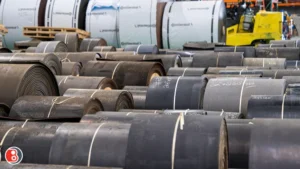
You’ve replaced this belt before its time. Cuts along the edge. Gouges where trapped material caught it wrong. A cover that looked fine at delivery and thin within a year. In an aggregate application, it’s tempting to call that normal.
It’s not normal. It’s a sign the belt grade doesn’t match what it’s being asked to survive.
Premature belt failure is one of the most expensive problems in a conveyor system, and it rarely shows up as one clean break. It shows up as splice failures that take the belt down mid-shift, edge damage that spreads until the whole belt needs replacing, and cover wear that turns a planned maintenance window into an unplanned shutdown.
Where Belt Failure Actually Starts
Most premature failures trace back to one of a few decisions made before the belt was ever installed:
- Cover grade that doesn’t match the material — A Grade 2 cover on a Grade 1 application wears through fast. Sharp, abrasive, or hot material needs a cover built to take that abuse, not just carry the load.
- Fabric construction that can’t handle the impact — The carcass underneath the cover absorbs the shock of loading. The wrong construction leads to splice fatigue and internal damage you won’t see until the belt fails.
- No protection against heat — Hot material or direct sun exposure breaks down standard covers faster than most people expect. A belt without heat protection is working against itself from day one.
- Splices that were never built to last — A weak splice is often the first thing to go, and it takes the rest of the belt down with it.
The Belting That Actually Holds Up
Binkelman carries the Continental ContiTech belting built for the abuse aggregate operations put on a belt — and we’ll help you match the grade to the application instead of guessing.
Grade 1 vs. Grade 2 Covers — Grade 1 covers are built for higher-abrasion, higher-impact applications; Grade 2 covers cost less but wear faster under the same conditions. We’ll walk your system and tell you which one you actually need.
Defender Plus Compounds — Continental’s Defender Plus cover compounds are engineered for cut, gouge, and tear resistance in the applications that chew through standard belting.
Plylon Plus — A reinforced fabric construction built for higher tensile strength and impact absorption, with covers that hold up in wet, oily, and dry conditions.
ContiTitan — Heavy-duty belting for the most demanding, high-tonnage aggregate applications, where standard belting doesn’t survive a full season.
Polyflex — For lighter-duty runs where flexibility and a smaller pulley diameter matter more than maximum abrasion resistance.
SolarShield — Heat- and oxidation-resistant covers for belts running hot material or sitting in direct sun, where standard covers crack and harden early.
Installation Is Half the Battle
The right belt grade still fails early if it’s installed wrong. Binkelman’s service team handles vulcanized splicing, mechanical splicing, and SuperScrew installation — plus lagging installation and spot repairs when a section of belt is damaged but the rest still has life left in it.
We also run ultrasonic gauge measurements on existing belts. It’s a non-destructive way to see cover thickness and internal wear before a belt fails, and it often reveals loading problems that are wearing the belt down faster than they should.
Start With a Belt Survey
Not sure if your current belt grade matches your application? Binkelman’s team will walk your system, take ultrasonic measurements where it matters, and come back with a specific recommendation — not just a sales pitch.
Three locations ready to support you: Bowling Green, Piqua, and Saginaw.
Call 1-800-862-4673 or visit binkelman.com to schedule a belt survey.

