Send someone to town for a hose, and you’ve pulled him off the floor, put him in a truck, and handed your schedule to someone else. Do that enough times and it stops looking like a minor inconvenience and starts looking like a liability.
More reliability and safety managers are asking the same question: why are we still outsourcing something this basic?
The Case for an In-House Crimp Shop
An in-house hydraulic hose shop isn’t only about speed. It changes the risk profile of the whole operation.
Fewer unplanned trips: Every off-site run for a hose is time a technician isn’t on the floor and time your equipment sits idle. Cut the trip, cut the exposure.
Consistent, documented assemblies: When one shop builds every hose the same certified way, you’re not depending on which supplier had time that day.
Fewer rushed field repairs: A rushed repair under pressure, with the wrong tools or an improvised fitting, is where safety incidents happen. An in-house shop takes the rush out of it.
Full traceability on every assembly: Know what’s on your equipment, when it was built, and when it needs to come off, before it fails, not after.
What’s Actually in the Box
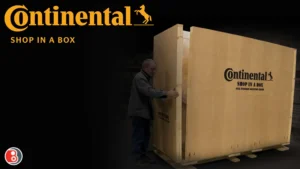
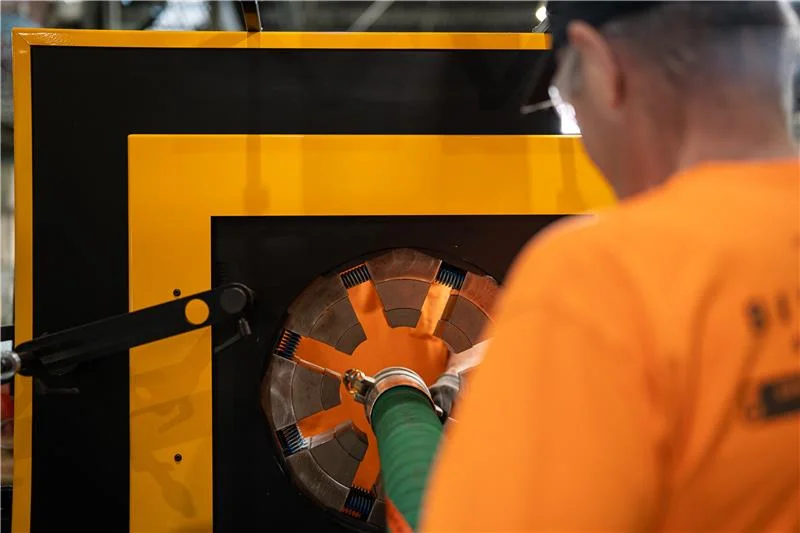
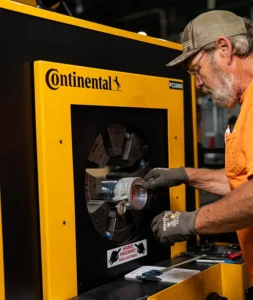
Continental’s Shop in a Box turns any open bay into a certified hydraulic and industrial hose crimp shop:
Work Table & Storage: An adjustable-height work table with a four-drawer cabinet, small and large bins, and a hose reel rack keep the whole setup organized and repeatable.
CrimpIQ™ Tablet: Cloud-connected specs mean your team pulls the exact crimp settings for the job, not what they remember from last time.
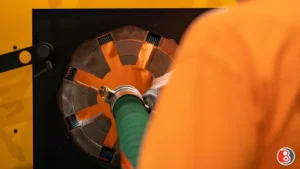
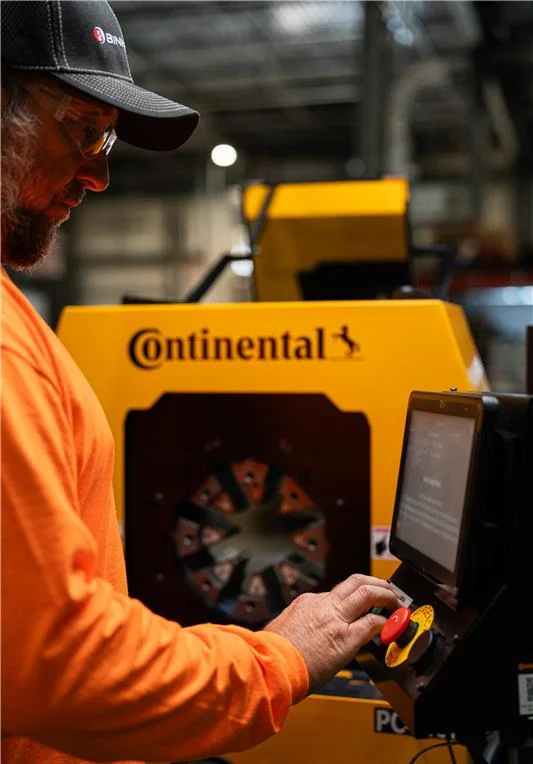
Crimper Options for Any Volume: PC125-RCD, PC160i, PC150HD, PC200M, PC200i, and PC440i. Binkelman will help you match the crimper to your hose sizes and daily volume, from light-duty runs to high-capacity production.
Full Accessory Kit: Hose saw, calipers, insertion block assembly, LED lighting, air hose, tape measure, and an Ultra Clean starter kit. Everything needed to run the shop from day one.
Backed by Binkelman’s Certified Process
The equipment is only half of it. Binkelman’s hose centers follow NAHAD-certified assembly processes, and our team can set up, train, and support your in-house shop the same way we run our own counters at Bowling Green, Piqua, and Saginaw.
Talk Through Your Setup
If your team is still making runs for hose repairs, it’s worth a conversation. Binkelman will look at your current hose usage and downtime and give you an honest read on whether a Shop in a Box setup pays for itself.
Three locations ready to support you: Bowling Green, Piqua, and Saginaw.
A hydraulic line blows mid-shift. The machine goes down. Someone grabs the old hose, drives it to a supplier, waits in line, and drives back, hoping the counter had the right fitting in stock. An hour turns into three. Three turns into the rest of the shift.
That’s not really a hydraulic hose problem. It’s a process problem.
Every operation running hydraulic equipment deals with hose failure eventually. It’s not a matter of if, it’s when. What separates a five-minute fix from a half-day shutdown isn’t the hose itself. It’s whether you can build the replacement the moment you need it, or whether you’re waiting on someone else’s schedule to do it for you.
Where Hydraulic Downtime Actually Starts
Most hydraulic downtime doesn’t start with the failure. It starts with what happens right after:
No in-house crimping capability: Without a crimper on-site, every hose failure means a trip off-site, and every trip off-site means downtime nobody budgeted for.
Guesswork on hose and fitting selection: Matching the wrong hose to the wrong fitting doesn’t just risk a bad assembly. It risks a failure under pressure, which is a safety issue as much as a downtime issue.
No record of what’s on your equipment: Without traceability on an assembly, nobody knows what’s installed, when it was built, or when it’s due for replacement, until it fails again.
Waiting on someone else’s queue: Off-site vendors have their own priorities. Your emergency isn’t necessarily their emergency.
Bring the Crimp Shop to You
Binkelman is an elite ContiTech hydraulic hose distributor, and Continental’s Shop in a Box is the fastest way to put a full crimp shop inside your own facility. No separate suppliers, no guesswork, no waiting on a truck.
Shop in a Box: A turnkey hydraulic and industrial hose crimp shop ordered under a single part number. It arrives fully assembled and ready to build premium assemblies within minutes of unpacking.
CrimpIQ™ Tablet & CrimpCloud: Select the hose, fitting, and size, and the correct crimp specs come up automatically. No manuals, no adjustments, no guessing.
Six Crimper Configurations: From the compact PC125-RCD to the high-capacity PC440i, each Shop in a Box is built around the crimper that matches your hose sizes and daily volume.
Built-In Traceability: Every assembly gets a printed label with a scannable QR code, so the next person who touches that hose knows exactly what it is and when it needs replacing.
Assembly Quality Still Comes Down to the Build
A crimper is only as good as the process behind it. Every hose assembly built at Binkelman, whether it’s on our counter or set up inside your facility, follows NAHAD-certified processes using precision crimping equipment. That’s the difference between a hose that holds and one that fails early.
See What Shop in a Box Looks Like in Your Facility
Not sure if an in-house crimp shop makes sense for your operation? Binkelman’s team will walk through your hose volume, application, and current downtime costs, and help you figure out which Shop in a Box configuration fits.
Three locations ready to support you: Bowling Green, Piqua, and Saginaw.
Call 1-800-862-4673 to talk through your hydraulic hose setup.
Material on the walkways. Buildup under the return run. A cleanup crew that spends more time on carryback than on planned maintenance. It’s easy to blame the belt. Most of the time, the belt is just where the problem shows up.
Tracking issues and pulley slippage are usually the real cause — and they compound. A belt that wanders even slightly spills material at every transfer point. Once it starts, it wears the belt edge, throws off your cleaners, and puts you back in this same spot next week.
Where Tracking and Slippage Actually Start
Worn or wrong pulley lagging — Lagging is what gives the pulley the traction to drive the belt straight. Once it wears smooth or was never matched to the application, the belt slips and wanders under load.
Standard pulleys in a high-carryback application — Flat-face pulleys let material pack between the belt and the pulley face. That buildup throws off tracking on both sides of the system.
No training mechanism at the return — Without something correcting alignment on the return run, a belt that starts to wander keeps wandering until someone notices the spillage.
Skirting that’s failed or was never installed right — Once material escapes at the load point, it’s already too late to stop it from becoming carryback further down the system.
The Components That Fix It at the Source
Diamond and Ceramic Lagging — Diamond-pattern and ceramic lagging give the pulley significantly more traction than standard rubber, cutting down slippage and helping the belt track straight under full load.
Clean-Flight and Herringbone Wing Pulleys — Martin’s Clean-Flight and PPI’s Herringbone wing pulleys let material pass through the pulley face instead of packing against it. Less buildup means better tracking and a cleaner return run.
EZ Slider Impact Beds — At the load zone, impact beds absorb the shock of material hitting the belt instead of letting the belt take that punishment directly. Less punching and gouging at impact means fewer holes and less carryback caused by damaged cover.
Return Training Brackets — When a belt keeps wandering no matter what else you fix, training brackets correct alignment on the return run and solve it permanently instead of temporarily.
Skirting Systems — Properly installed skirting seals the load point without damaging the belt’s top cover, so material stays contained before it ever has a chance to become carryback.
Diagnosis Matters as Much as the Parts
A belt that’s tracking badly for one reason won’t be fixed by a part that solves a different reason. Binkelman’s service team walks the system, identifies whether you’re dealing with a lagging issue, a pulley issue, or a loading issue, and recommends the fix that actually addresses it — not just the first part that might help.
That same visit is a good time for belt spot repairs on any sections showing impact damage, and for cleaner installs or adjustments if carryback has already started building up on your idlers.
Get a Tracking Diagnosis, Not a Guess
If you’re fighting the same tracking or slippage problem month after month, it’s worth having someone look at the whole system instead of replacing the same part again.
Three locations ready to support you: Bowling Green, Piqua, and Saginaw.
You’ve replaced this belt before its time. Cuts along the edge. Gouges where trapped material caught it wrong. A cover that looked fine at delivery and thin within a year. In an aggregate application, it’s tempting to call that normal.
It’s not normal. It’s a sign the belt grade doesn’t match what it’s being asked to survive.
Premature belt failure is one of the most expensive problems in a conveyor system, and it rarely shows up as one clean break. It shows up as splice failures that take the belt down mid-shift, edge damage that spreads until the whole belt needs replacing, and cover wear that turns a planned maintenance window into an unplanned shutdown.
Where Belt Failure Actually Starts
Most premature failures trace back to one of a few decisions made before the belt was ever installed:
Cover grade that doesn’t match the material — A Grade 2 cover on a Grade 1 application wears through fast. Sharp, abrasive, or hot material needs a cover built to take that abuse, not just carry the load.
Fabric construction that can’t handle the impact — The carcass underneath the cover absorbs the shock of loading. The wrong construction leads to splice fatigue and internal damage you won’t see until the belt fails.
No protection against heat — Hot material or direct sun exposure breaks down standard covers faster than most people expect. A belt without heat protection is working against itself from day one.
Splices that were never built to last — A weak splice is often the first thing to go, and it takes the rest of the belt down with it.
The Belting That Actually Holds Up
Binkelman carries the Continental ContiTech belting built for the abuse aggregate operations put on a belt — and we’ll help you match the grade to the application instead of guessing.
Grade 1 vs. Grade 2 Covers — Grade 1 covers are built for higher-abrasion, higher-impact applications; Grade 2 covers cost less but wear faster under the same conditions. We’ll walk your system and tell you which one you actually need.
Defender Plus Compounds — Continental’s Defender Plus cover compounds are engineered for cut, gouge, and tear resistance in the applications that chew through standard belting.
Plylon Plus — A reinforced fabric construction built for higher tensile strength and impact absorption, with covers that hold up in wet, oily, and dry conditions.
ContiTitan — Heavy-duty belting for the most demanding, high-tonnage aggregate applications, where standard belting doesn’t survive a full season.
Polyflex — For lighter-duty runs where flexibility and a smaller pulley diameter matter more than maximum abrasion resistance.
SolarShield — Heat- and oxidation-resistant covers for belts running hot material or sitting in direct sun, where standard covers crack and harden early.
Installation Is Half the Battle
The right belt grade still fails early if it’s installed wrong. Binkelman’s service team handles vulcanized splicing, mechanical splicing, and SuperScrew installation — plus lagging installation and spot repairs when a section of belt is damaged but the rest still has life left in it.
We also run ultrasonic gauge measurements on existing belts. It’s a non-destructive way to see cover thickness and internal wear before a belt fails, and it often reveals loading problems that are wearing the belt down faster than they should.
Start With a Belt Survey
Not sure if your current belt grade matches your application? Binkelman’s team will walk your system, take ultrasonic measurements where it matters, and come back with a specific recommendation — not just a sales pitch.
Three locations ready to support you: Bowling Green, Piqua, and Saginaw.
Walk past most belt cleaners and they look fine. The blade is there. The mounting arm is in place. Nothing is visibly broken.
But “looks fine” isn’t the same as “making contact.” And a cleaner that isn’t making proper blade contact isn’t cleaning. It’s just hanging there while your carryback problem quietly gets worse.
The Problem with Reactive Cleaner Maintenance
Most operations replace belt cleaner blades when someone notices a mess — material on the walkways, buildup under the system, a cleaner that’s visibly worn down to the mounting hardware.
By that point, the damage is already done. Carryback has been running unchecked long enough to load up your idlers, accelerate belt wear, and create a safety situation on the walkways. And whoever is responsible for maintenance has been spending time cleaning instead of doing planned work.
Reactive cleaner maintenance costs more than proactive cleaner maintenance. That’s not a guess — it’s what you see when you add up the cleanup hours, the idler replacements, and the early belt failures that trace back to uncontrolled carryback.
What Proper Cleaner Performance Actually Looks Like
A belt cleaner is doing its job when the blade is maintaining consistent contact across the full belt width at the correct blade angle and tension for your belt speed, material type, and pulley diameter.
That spec changes as the blade wears. A new blade installed at the right angle will lose that angle as it wears down. Without periodic adjustment or a monitoring system, you have no way to know when performance has dropped off — unless you’re physically inspecting it on a regular schedule.
That’s where most maintenance programs fall short. The cleaner gets installed, someone checks it for a few weeks, and then it gets forgotten until the mess comes back.
Flexco Heavy-Duty Belt Cleaners — Built for Real Applications
Flexco’s primary and secondary belt cleaner lineup is engineered for the kind of material and belt speeds you’re actually running in aggregate, mining, and industrial applications — not light-duty conveyor environments.
Primary cleaners work at the head pulley discharge point, removing the bulk of carryback material. Secondary cleaners work on the return run, catching what the primary misses. In high-carryback applications, both are typically needed.
The right Flexco cleaner for your application depends on belt speed, material characteristics, belt width, and pulley diameter. Binkelman can help you spec it correctly — and more importantly, install it correctly.
Elevate PDM: Know Before the Mess Comes Back
Elevate is a predictive maintenance solution that monitors your belt cleaners remotely. It tracks blade performance and alerts you when contact pressure, angle, or wear has dropped below an effective threshold.
Instead of waiting until carryback shows up on the walkway, you know the moment a cleaner needs attention. Scheduled blade service instead of emergency cleanup. Planned downtime instead of unplanned downtime.
For operations with multiple conveyor lines or cleaners spread across a large facility, Elevate gives maintenance teams a clear picture of the whole system without physically inspecting every cleaner on a set schedule.
Cleaner Maintenance Programs
Binkelman offers cleaner installation and ongoing maintenance programs — scheduled blade inspections, tensioning adjustments, and replacements on a defined interval. Paired with Elevate monitoring, your cleaners stay effective and your maintenance team gets ahead of problems instead of reacting to them.
We keep the blade inventory on hand at Bowling Green, Piqua, and Saginaw. When a blade needs replacement, we can turn it around fast.
The Bigger Picture: Containment as a System
Belt cleaners are one part of the containment equation. If skirting at the load zone is worn or improperly clamped, material is escaping before the belt ever reaches the cleaner. If pulley design is letting material pack on the return side, the cleaner is fighting a losing battle.
Binkelman does full containment surveys. We walk your system, identify every point where material is escaping, and come back with a clear set of recommendations — cleaners, skirting, pulleys, and tracking components — based on what we actually see.
Call 1-800-862-4673 or contact your Binkelman rep to schedule a cleaner assessment or full containment survey.
You’ve seen it. Material on the walkways, dust hanging in the air, your crew running cleanup instead of running production. It’s easy to chalk up conveyor spillage to just part of the job.
It’s not. Carryback and spillage are symptoms of a containment problem — and that problem compounds fast.
Here’s what’s actually happening when material leaves the belt.
It’s Not Just a Mess — It’s a Chain Reaction
Carryback is the material that sticks to the belt after the discharge point and gets carried back through the return run. It falls off along the way, collects under the system, and builds up on idlers and structural components.
That buildup does damage. Idlers caked with material run out of round, which accelerates belt wear. Return-side buildup throws off belt tracking, which causes edge damage and premature splice failure. And every hour your maintenance crew spends cleaning is an hour they’re not doing planned work.
Then there’s MSHA. Material on conveyor walkways is a violation. If you’re running aggregate, mining, or any application subject to inspection, spillage isn’t just a maintenance issue — it’s a compliance issue.
Where Containment Breaks Down
Most conveyor systems don’t fail at containment because of one thing. It’s usually a combination:
Worn or poorly tensioned belt cleaners — Primary and secondary cleaners that aren’t making proper blade contact aren’t cleaning. A cleaner that looks fine visually can still be letting material through if blade pressure or angle is off.
Failed skirting at the load zone — This is where most spillage starts. If the skirt rubber is worn, stiff, or improperly clamped, material escapes at the transfer point before the belt even gets going.
Wrong pulley design for the application — Standard flat pulleys in high-carryback applications allow material to accumulate and pack. That buildup throws off belt tracking and eventually causes damage on both sides of the system.
Belt tracking issues — A belt that wanders — even slightly — spills at every transition point. Tracking problems and containment problems almost always show up together.
The Products That Actually Fix It
Binkelman carries the components that address each part of the containment problem. More importantly, we install and maintain them.
Flexco Heavy-Duty Belt Cleaners — Primary and secondary cleaners built for real aggregate and industrial applications. Not just the right product, but properly installed and tensioned for your belt speed, material, and pulley diameter. An improperly installed cleaner is barely better than no cleaner at all.
Flexco Skirting Systems — Skirt rubber, clamp systems, and impact beds that seal the load zone and contain material at the transfer point. Properly installed skirting prevents spillage before it starts.
Martin Clean Flight Pulleys — Continuous wing pulley design that sheds material from the pulley face on the return run. Instead of material packing between belt and pulley, it falls through the wing profile. Less buildup means better tracking and a cleaner return run.
PPI Wing and Herringbone Pulleys — PPI’s continuous wing and herringbone designs serve the same function: material passes through rather than packing on the pulley. The right choice depends on your belt speed, material characteristics, and system design — Binkelman can help you spec it correctly.
PPI Slider Beds and Training Idlers — When tracking is the root cause of your spillage, training idlers address the problem at the source. Slider beds reduce the gap at transition points where material can escape.
Elevate PDM — Remote monitoring for your belt cleaners. Elevate tracks blade performance and alerts you when a cleaner stops doing its job — before the carryback shows up on the walkway.
Why Installation and Maintenance Matter as Much as the Product
The right product, installed wrong, doesn’t solve the problem. A primary cleaner that’s correctly specified but installed at the wrong angle won’t make proper blade contact. Skirting that’s tensioned too tight will wear through in weeks.
Binkelman’s service team installs and maintains all of the components above. We also do containment surveys — walking your system, identifying where material is escaping, and giving you a clear picture of what it would take to fix it. No guesswork.
If your cleaners are on a maintenance program with Elevate monitoring, you’ll know the moment blade wear starts affecting performance. That’s the difference between scheduled maintenance and emergency cleanup.
Start with a Containment Survey
Not sure where to start? Binkelman’s team will walk your conveyor system, identify where material is escaping, and come back with a specific set of recommendations.
Three locations ready to support you: Bowling Green, Piqua, and Saginaw.
Call 1-800-862-4673 or visit binkelman.com to schedule a containment survey.
Spring and summer are your busiest months. Pavers running long shifts. Excavators at full capacity. Industrial equipment that hasn’t been pushed like this since last fall.
That’s when hydraulic hose failures hurt the most — because you can’t afford the downtime.
The good news: most failures are preventable. And when they do happen, how fast you recover depends entirely on where you go and what they have in stock.
What Makes Hydraulic Hose Failures Predictable
Hoses that spent the winter in cold storage or on idle equipment come back into heavy service stressed. Rubber compounds stiffen. Pressure cycling weakens assemblies that were already aging. Increased runtime does the rest.
Replacing high-risk assemblies before peak season — and building backup assemblies for your critical lines — takes an hour. An unplanned failure takes a lot longer.
The Right Hose for Heavy-Duty Applications
Continental XR16 — High-pressure hydraulic hose with a compact bend radius, built for tight routing and demanding systems. Pressure stability, abrasion resistance, and consistent performance under sustained load.
Continental XCP — Engineered for extreme pressure and harsh operating conditions. Higher pressure ratings and superior abrasion resistance for heavy equipment running at full capacity.
Binkelman is an elite Continental hydraulic hose distributor. We stock XR16 and XCP with Continental fittings and adaptors across all three locations.
Assembly Quality Is the Other Half of the Equation
The best hose fails if the assembly isn’t right. Improper crimping is one of the leading causes of premature hydraulic hose failure and it’s entirely avoidable.
Every assembly built at Binkelman follows NAHAD-certified processes using precision crimping equipment. Bring in your old assembly or the specs, and we’ll build a new one while you wait at any of our three locations — Bowling Green, Piqua, and Saginaw.
If you’re seeing recurring failures in the same locations, that’s an application problem worth solving before it happens again. Our team can assess your hose routing, identify assemblies that are candidates for replacement, and recommend Continental specs matched to your actual operating conditions.
Stop in at any Binkelman location or call 1-800-862-4673.
Industrial hose failures are rarely random. When you’re replacing the same assembly every few months, something about the application isn’t right.
Wrong hose for the media. Cover that can’t handle the abrasion. Routing that creates constant stress at the fitting. Temperature range the hose wasn’t designed for. These aren’t bad luck — they’re fixable problems with a known cause.
Match the Hose to the Application
Continental ContiTech industrial hose covers the full range of process applications: air, bulk transfer, water, chemical handling, steam with constructions engineered to the demands of each environment.
Abrasion-Resistant Options — For aggregate service, slurry transfer, and applications where cover wear is the primary failure mode. Continental ContiTech abrasion-resistant covers are built to take the abuse your standard hose can’t.
Chemical & Media-Compatible Constructions — Using the wrong hose in a chemical environment degrades the cover from the inside out. Continental ContiTech application-specific hose is matched to your media so you get the service life you expect.
Temperature-Rated for Your Process — Steam lines, hot water transfer, and high-temp process environments require hose that’s rated for actual operating conditions, not just ambient. Getting this right is the difference between a hose that lasts and one that doesn’t.
Fittings and Assembly: Done Right the First Time
Binkelman pairs Continental ContiTech hose with Dixon, PT Coupling, and Campbell fittings — properly selected for your application and crimped to manufacturer specifications.
If you’re running banded assemblies in critical service, it’s worth looking at them. Crimped assemblies provide consistent, repeatable terminations that hold under pressure and vibration. Banding doesn’t.
Services That Go Beyond the Assembly
We offer hose tagging and tracking systems to help maintenance teams manage inspection intervals and catch aging assemblies before they fail in production. When a failure does happen, failure analysis identifies the root cause — so you’re not just replacing it, you’re fixing it.
If your facility has recurring industrial hose problems in specific locations, a plant hose audit is worth the time. Binkelman’s team assesses routing, specs, and assembly quality on-site and comes back with a clear picture of where to focus.
Industries We Support
Chemical processing, glass manufacturing, aggregate, steel, automotive, and general industrial. If you run process hose in a demanding environment, we’ve worked through problems like yours before.
Contact your Binkelman rep or call 1-800-862-4673 to schedule a plant hose audit or work through a specific failure problem.
Production is ramping up. And your conveyor system is about to tell you everything you missed over the winter.
The components that were borderline in February are going to fail under full load. The splice that looked okay on a visual check won’t hold through a sustained production run. The bearing running a little warm is going to run a lot warmer when it’s working harder.
The time to deal with those weak points is now — before peak season turns a manageable problem into an emergency shutdown.
Stop Problems Before They Stop You
Binkelman’s spring belt inspection service is designed for exactly this moment. Our team identifies splice fatigue, edge damage, and cover wear before it becomes a failure in production. We also offer ultrasound inspections for a deeper look at what’s happening below the surface.
Pair that with a drive system and bearing check, and you’ve addressed the most common sources of unplanned downtime heading into your busiest months.
The Components That Matter Most Right Now
Dodge Defender, Type E & TA2 Bearings — Built for contaminated, high-vibration environments. If you’re seeing heat, noise, or early replacements, your bearing spec or lubrication program may need attention.
Dodge MTA & TA2 Reducers — Shaft-mounted reducers engineered for long service life and simplified maintenance. Reliable performance during high-demand production runs.
Continental ContiTech Conveyor Belting — Premium belting with higher tensile strength and longer cover life for aggregate and the most demanding applications. Built to perform when the tonnage is real.
PPI Pulleys & Idlers — Continuous wing versus standard wing pulleys and mine-duty versus CEMA options engineered to your load requirements, not just what fits. Proper spec prevents shell failures and belt tracking problems.
Flexco Cleaners, Skirting & Belt Tracking Solutions — Carryback isn’t just a mess. It drives up maintenance labor, shortens idler life, and creates safety risks. Flexco belt tracking and containment solutions keep material where it belongs.
Services Ready When You Need Them
Having the right products is only part of it. Binkelman’s service team is available for spring belt inspections, preventative maintenance walks, vulcanization, blade replacements, and installation support at all three locations.
For operations running Elevate or Optify monitoring, this is also a good time to review your data and flag any trends worth addressing before production peaks.
We stock Dodge, Martin, Continental, PPI, Flexco, and Martin components at Bowling Green, Piqua, and Saginaw — so when something needs to happen fast, we’re ready.
Contact your Binkelman rep to schedule a pre-season inspection or talk through what’s most at risk in your system this spring.
Industrial hose failures are rarely random. More often, they come down to using a hose that wasn’t designed for the job.
And over time, that mismatch leads to repeated failures, leaks, and unnecessary downtime.
Use the Right Hose for Your Process
Continental ContiTech Gorilla® Hose
A durable, heavy-duty air and water hose designed for tough industrial environments. Known for its abrasion resistance and flexibility, Gorilla is ideal for general-purpose use where reliability matters.
Continental Frontier™ 300
A versatile air and multipurpose hose built for medium-duty applications. It offers a balance of performance and cost-efficiency, making it a solid choice for everyday plant use.
Continental Variflex® 200
Designed for light-duty applications requiring flexibility and ease of handling. Variflex is ideal for operations where maneuverability and lighter weight are key.
Why Matching Matters
Each hose is engineered for specific pressure ranges, temperature limits, and environmental conditions. Using the wrong one—even if it “works” initially—leads to faster wear and shorter service life.
Reduce Failures With a Better Approach
Instead of relying on guesswork, Binkelman evaluates your application and recommends the right Continental ContiTech hose for your exact conditions.
This results in:
Longer hose life
Fewer replacements
More consistent system performance
Start the Season Leak-Free
Spring is the perfect time to reset your system and eliminate weak points before production ramps up.
Make sure your hose is working for you—not against you.