For most companies that run continuously, shutdowns and outages consume a lion’s share of both the maintenance and capital budgets. By its very nature, the shutdown is fat. The reason for this is the skewed balance between the cost of downtime and the costs of shutdown resources. In some cases the costs of having extra resources (such as extra cranes) are dwarfed by the avoided cost of downtime. Shutdowns are also fat because the attitude is “Get’er done and we’ll worry about the budget when it’s over.” Times have changed. This old approach to shutdowns is taken too far and in itself becomes a fat. It is certainly a fat approach now when times are tough and prices and demand soften. The fact that the downtime is more expensive than resources under any economic condition doesn’t justify the waste of resources.
Discoverables are a key
source of fat. Discoverables are
jobs that are “discovered” after
the shutdown starts (when you
start opening things up.)
Bad meetings are fat.
Use project management
software.
85% of the planning and
scheduling work is done before
the shutdown begins.
Keep an eye on over-
ordering of materials and return
unused inventory as soon as you
know you won’t use it.
Note explicitly whether
there are enough supplies
for the entire shutdown (the
planner should put their hands
on these items and not accept
the computer’s inventory level).
Keep an eye on excessive
numbers of rented cranes,
welding units, generators, compressors, tanks, scaffolding
and other equipment.
Be on the lookout for
situations where resources are
being paid for but are not being
used.
Validate the work list and
remove duplications.
Settle claims with any
contractors promptly to avoid
additional fees and penalties.
The Dodge gear reducer product line offers a full line of modular gear drives engineered for flexibility, greater torque density in a compact housing configuration, and increased horsepower capability from 0.25 to 73.76 hp (0.18 to 55 kW). The Quantis family of products offers the customer three types of gear reducers: In-Line Helical (ILH), Right-Angle Helical Bevel (RHB) and Motorized Shaft Mount (MSM). All three types of reducers are dimensionally interchangeable with major global competitors.
We Can Build A Dodge Gear Reducer For You
Binkelman is authorized to assemble Quantis ILH and RHB in five sizes
(38 through 108). For ILH, two input configurations including c-face clamp collar motor adapters for input motor flexibility and separate inputs for v-belt mounting are available.
RHB input configuration includes c-face clamp collar, and output
configurations of solid, straight hollow and taper shafts.
Factory trained, expert technicians and mechanics
ISO certified and warranted by DODGE
Assembled to order ILH & RHB configurations
Quick delivery response – same day, 24 or 48 hour deliveries can be arranged if required.
Dedicated support staff that’s experienced and knowledgeable about the QUANTIS ILH & RHB product
For more information on DODGE QUANTIS gear reducer solutions click here.
Hydraulic hose provides a basic means for transporting fluid from one component to another, and at the same time it supplies an inherent versatility to designers.
To say that hose is an important part of a hydraulic system is a huge understatement. The flexibility of hose enables components to be positioned in the most efficient or convenient places, because the hose has the ability to bend around corners, through tight spaces, or across long distances.
Yet these days, there seems to be as many different types of hose as there are telephone long-distance carriers. How does a designer tell one from the other? Isn’t there an easy way to choose or compare hoses?
The SAE Standards
SAE answers those questions with its J517 hydraulic hose standard. This hose standard serves as the most popular benchmark in the realm of industrial hydraulics today. More specifically, J517 is a set of guidelines that applies to the current SAE 100R series of hoses. Currently, 16 such hose styles exist, and they are designated as 100R1 through 100R16 (see descriptions, pages A105 and 106). Each of the styles must meet a set of dimensional and performance characteristics as set forth by SAE. However, SAE issues no approval source lists, certification, or letters of approval-conformance to these standards by manufacturers is strictly voluntary. In short, the standards only assure a similarity of products among different manufacturers.
Hydraulic Hose Construction
Modern hydraulic hose typically consists of at least three parts: an inner tube that carries the fluid, a reinforcement layer, and a protective outer layer.
The inner tube must have some flexibility and needs to be compatible with the type of fluid it will carry. Commonly used compounds include synthetic rubber, thermoplastics, and PTFE, sometimes called Teflon. The reinforcement layer consists of one or more sheaths of braided wire, spiral-wound wire, or textile yarn. The outer layer is often weather-, oil-, or abrasion-resistant, depending upon the type of environment the hose is designed for.
Not surprisingly, hydraulic hoses have a finite life. Proper sizing and use of the correct type of hose will certainly extend the life of a hose assembly, but there are many different factors that affect a hose’s lifespan. SAE identifies some of the worst offenses as:
•flexing the hose to less than the specified minimum bend radius
•twisting, pulling, kinking, crushing, or abrading the hose
•operating the hydraulic system above maximum or below minimum temperature
•exposing the hose to rapid or transient rises (surges) in pressure above the maximum operating pressure, and
•intermixing hose, fittings, or assembly equipment not recommended as compatible by the manufacturer or not following the manufacturer’s instructions for fabricating hose assemblies.
Selecting the Proper Hose
Here are seven recommended steps the system designer should follow during the hose and coupling selection process. To help determine the proper hose for an application, use the acronym STAMPED – from Size, Temperature, Application, Materials, Pressure, Ends, and Delivery. Here is what to consider in each area:
Size – In order to select the proper hose size for replacement, it is important to measure the inside and outside hose diameters exactly using a precision-engineered caliper, as well as the length of the hose. Hose OD is particularly important when hose-support clamps are used or when hoses are routed through bulkheads. Check individual hose specification tables for ODs in suppliers’ catalogs. When replacing a hose assembly, always cut the new hose the same length as the one being removed. Moving components of the equipment may pinch or even sever too long a hose. If the replacement hose is too short, pressure may cause the hose to contract and be stretched, leading to reduced service life. Changes in hose length when pressurized range between +2% to 4% while hydraulic mechanisms are in operation. Allow for possible shortening of the hose during operation by making the hose lengths slightly longer than the actual distance between the two connections.
Temperature – All hoses are rated with a maximum working temperature ranging from 200° to 300° F based on the fluid temperature. Exposure to continuous high temperatures can lead to hoses losing their flexibility. Failure to use hydraulic oil with the proper viscosity to hold up under high temperatures can accelerate this problem. Always follow the hose manufacturer’s recommendations. Exceeding these temperature recommendations can reduce hose life by as much as 80%. Depending on materials used, acceptable temperatures may range from -65° F (Hytrel and winterized rubber compounds) to 400° F (PTFE). External temperatures become a factor when hoses are exposed to a turbo manifold or some other heat source. When hoses are exposed to high external and internal temperatures concurrently, there will be a considerable reduction in hose service life. Insulating sleeves can help protect hose from hot equipment parts and other high temperature sources that are potentially hazardous. In these situations, an additional barrier is usually required to shield hydraulic fluid from a potential source of ignition.
Application – Will the selected hose meet bend radius requirements? This refers to the minimum bend radius (usually in inches) that a hydraulic hose must meet. Exceeding this bend radius (using a radius smaller than recommended) is likely to injure the hose reinforcement and reduce hose life. Route high-pressure hydraulic lines parallel to machine contours whenever possible. This practice can help save money by reducing line lengths and minimizing the number of hard-angle, flow-restricting bends. Such routing also can protect lines from external damage and promote easier servicing.
Materials – It is mandatory to consult a compatibility chart to check that the tube compound is compatible with the fluid used in the system. Elevated temperature, fluid contamination, and concentration will affect the chemical compatibility of the tube and fluid. Most hydraulic hoses are compatible with petroleum-based oils. Note that new readily biodegradeable or green fluids may present a problem for some hoses.
Pressure capabilities – Hose working pressure must always be chosen so that it is greater than or equal to the maximum system pressure, including pressure spikes. Pressure spikes greater than the published working pressure will significantly shorten hose life.
Hose ends – The coupling-to-hose mechanical interface must be compatible with the hose selected. The proper mating thread end must be chosen so that connection of the mating components will result in leak-free sealing. There are two general categories of couplings to connect most types of hose: the permanent type (used primarily by equipment manufacturers, large-scale rebuilders, and maintenance shops) and the field-attachable type. Permanently attached couplings are cold-formed onto the hose with powered machinery. They are available for most rubber and thermoplastic hoses and offer a wide range of dependable connections at low cost. Assemblies made in the field with portable machines are relatively simple; these machines are economical and easy to operate. In most cases, it is not necessary to skive the cover. These couplings are less complicated to install than other types. Field-attachable couplings are classified as screw-together and clamp-type. The screw-together coupling attaches to the hose by turning the outer coupling shell over the outside diameter of the hose. The coupling insert is then screwed into the coupling shell. A clamp-type coupling has a 2-piece outer shell that clamps onto the hose OD with either two or four bolts and nuts. In either case, the coupling has limited potential for reuse because the threads distort during attachment. To ensure the correct-size coupling is used when replacing an assembly, the number of threads per inch and thread diameter of the original coupling must be determined. Thread pitch gages are available for identifying the number of threads per inch. A caliper can measure both inside and outside dimensions of the threads. ODs are measured on male couplings, while IDs are measured on female couplings. In most situations, the only differences between an SAE coupling and an imported coupling are the thread configuration and the seat angle. International thread ends can be metric, measured in mm, but also include BSP (British Standard Pipe) threads, which are measured in inches. Knowing the country of origin provides a clue as to what type of thread end is used. DIN (Deutsche Industrial Norme) fittings began in Germany and now are found throughout Europe, while BSP is found on British equipment. Japanese Komatsu machinery uses Komatsu fittings with metric threads, while other Japanese equipment most likely uses JIS (Japanese Industrial StandardBSP threads), or, in some cases, BSP with straight or tapered threads.
Three determinations are required to identify these couplings correctly:
type of seat – inverted (BSPP & DIN), regular (JIS & Komatsu) or flat (flange, flat-face)
seat angle – 30° (JIS, BSP, DIN and Komatsu) or 12° (DIN), and
type of threads – metric (DIN or Komatsu), BSP (BSPP, BSPT or JIS), or tapered (BSPT or JIS Tapered)
SAE standards relating to hydraulic/pneumatic fittings and assemblies specifically designed to eliminate leakage include:
J514 – straight thread ports/fittings
J518c – 4-bolt flange ports/fittings, and
XJ1453 – the number provisionally assigned to O-ring face seal fittings.
Delivery – How available is the product? Is it unique? How soon can it be delivered to the distributor or end user? It may be preferable to consider several options to maximize flexibility and avoid the delays that can result from relying on components that are unavailable or in short supply.
This article was published in the Hydraulic & Pneumatics Magazine. The entire article lists the SAE Hose Specs in detail and is a great reference when specifying hydraulic hose.
Introducing Eaton’s LifeSense™ a patented hydraulic hose condition monitoring technology. LifeSense™ monitors the health of hydraulic hose assemblies. As the hose assembly approaches the end of its useful life, LifeSense™ detects events occurring within the hose that have been shown to lead to failure and notifies the designated individual that the hose needs to be replaced. This notification is provided with enough time to replace the hose during planned maintenance prior to failure thus saving downtime, clean-up costs, environmental damage and potential injury.
Benefits
Provides more than 50% more hose life
Increases reliability – detects and warns of impending failure
Improves maintenance/operations efficiency – automates inspections, ongoing and real-time monitoring
Protects the environment – mitigates potential hazards
Sudden hose failure has been a major potential problem for fluid power applications since hydraulic hose was first introduced decades ago. Sudden failures can lead to safety issues, environmental concerns and downtime that in extreme cases, such as offshore oil rigs, have been estimated to cost as much as $500,000 a day. Click to finish article featured in Design News magazine.
Learn more with video explaning this revolutionary technology.
Mine Expo 2012 is this week, so for those of you that didn’t make it out to Vegas here are some products that can help increase your bottom line.
Conquest XP: ContiTech Engineered Products
ConquestXP™ primary crusher belt has the power to keep your bottom line on its shoulders. Backed by the power of Fortress™ Technology, an innovation in rubber compounding and reinforcement technology, ConquestXP™ is built to excel in impact and puncture resistance. Including one-ply 330, one-ply 440, two-ply 660 and two-ply 880, and available with ContiTech Engineered Products compounds like Defender®, Stacker®, Survivor® and Global X®, this belt is ready for anything you can throw at it. When good just isn’t good enough, start a Conquest.
Retro Rolls: PPI- Precision Pulley and Idler
PPI Retro Rolls allow you to use our proven idler rolls in other manufacturers frames. You get the durability and low maintenance that PPI is known for without having to replace existing frames. Available in CEMA B, C, D, and E Series Rolls. A solution for reduced inventory, labor and downtime.
Belt Cleaners and Plows: Flexco
Belt cleaning is necessary to optimize the performance of your conveyor system. Clean belts will last about 150% longer and require 50% less maintenance, helping to reduce costs and downtime for repairs or maintenance for the entire system.
Mine Duty Extra (MDX) Conveyor Pulleys: Dodge
Drum Pulleys: Standard, stock mine duty drum pulley assemblies that fit CEMA dimensions and exceed the CEMA application standards by two to five times depending upon pulley size. One piece integral hubs that eliminate welded hub heat affected zones (HAZ). HE (High Endurance) 14-degree taper bushings with the lowest bellows installation stress of any taper bushing shaft mounting system for two hub pulley applications. Full 360-degree fillet welding of internal center discs.
Wing Pulleys: Extremely heavy, strong mine duty wing pulley assemblies that fit CEMA dimensions and exceed the CEMA application standards by 2 to 5 times depending upon pulley size. One piece integral hubs that eliminate welded hub heat affected zones (HAZ). HE (High Endurance) 14-degree taper bushings with the lowest installation bellows stress of any taper bushing shaft mounting system for 2 hub pulley applications. Rugged wing-on-drum construction incorporating 2″ x 3/4″ thick contact bars, 3/8″ thick wings and 3/8″ thick spacers.
Quarry Duty Motors: Toshiba
Toshiba’s definite purpose XT, totally enclosed fan cooled, high efficiency, Quarry Duty motor series has a proven track record of exceeding the extreme demands in the cement and aggregate industries. Our Quarry Duty motors utilize a totally enclosed fan cooled design and provide exceptional high torque, oversized superior-grade roller bearings, and shafts built with high strength 4142 steel. The roller bearings on the motor’s drive-end allow for heavy radial loads normally associated with belt-driven applications.
Now available in 5mm, 8mm, 14mm and 20mm sizes,* offering greater productivity and efficiency
Sprocket compatibility with the Gates HTD, PowerGrip GT and GT2, Carlisle RPP and RPP Plus and TB Wood’s Synchronous QD
Enhanced Wingprene™ compound affords greater flexibility, less flex fatigue and longer life
Improved tooth facing for greater abrasion resistance than Hi-Performance Pd Plus
100% greater life expectancy than our previous Hi-Performance Positive Drive Plus belt
Industry-compatible nomenclature for easy part number interchange
Completed Line-up – Hawk Pd is now available in all the popular pitches – 5mm, 8mm, 14mm and 20mm – adding to the universal appeal of this premium product.
Compounding / Reinforcement Integration – Hawk Pd is an exceptional example of a molded, high-performance rubber composite, giving end-users the latest drive belt technology from ContiTech.
MRO Replacement – Hawk Pd can be a superior MRO retrofit to many existing drives, giving the end-user potentially longer life without changing drive hardware.
Properly installing large bore roller bearings is essential in achieving the maximum life of a mounted bearing. It’s estimated that the second most common cause of failure of large bore bearings is improper mounting techniques. Failure can come in the form of shaft-attachment loss, excess vibration and elevated bearing temperatures. Following proper mounting techniques will ensure that the bearing is mounted correctly, and that the maximum life of the bearing will be realized.
There are many different methods of mounting large bore bearings. Common methods include manual assembly, heat shrink, jackscrews, oil injection and hydraulics. The most common is the manual method, which incorporates the use of a hammer and drift, or spanner wrench.
The manual approach involves a bearing, plus a sleeve, nut and washer. The adapter sleeve would be slid over the shaft, and the bearing over the adapter sleeve. The nut would be screwed onto the adapter sleeve, which then forces the bearing up the tapered OD of the sleeve. In turn, the movement of the bearing up the tapered OD of the sleeve would reduce the clearance in the bearing. This provides a press fit to the shaft.
Shim stock is used during this mounting process to measure the amount of radial clearance removed from the bearing. The shim stock is inserted between the roller and outer ring to determine the clearance reduction. When applying this method, the user tightens the nut, checks the clearance reduction, continues to tighten the nut, and measures the clearance reduction until the proper amount of clearance has been removed.
This method has always been suspect, as human error influences the measured values. It’s also very time-consuming, requires extreme physical effort, involves potential safety hazards, and in the end, leads to a questionably mounted bearing.
A solution to this problem is to use hydraulics to mount the bearing. The use of hydraulics dramatically decreases mounting time, eliminates much of the manual effort required, reduces the potential for injuries and ensures a proper press fit between the shaft, adapter and bearing. When mounting a bearing using hydraulics, the standard nut is temporarily replaced with a hydraulic nut.
The hydraulic nut consists of two pieces: the nut and a piston. In this scenario the hydraulic nut is screwed onto the tapered adapter sleeve. Fluid is then pumped into the nut, which causes the piston to extend. The piston comes into contact with the bearing inner ring and pushes it up the tapered adapter sleeve to the starting position. The starting position is considered the point at which the clearance between the shaft, adapter sleeve and bearing bore has been reduced to zero, and the bearing is snug to the shaft.
The next step is to place a measuring device onto the bearing inner ring or face of the piston to measure axial displacement. The measuring device can be as simple as a magnetic-base indicator or a displacement gauge. Continuing to supply hydraulic pressure to the nut will further displace the piston until the final position is obtained. At this point, the hydraulic nut would be removed and replaced by the standard nut.
The hydraulic nut supplier and bearing manufacturer supply the starting position pressure and required final displacement values. Applying hydraulic pressure to set the bearing (and measure axial movement of the bearing to remove the required clearance) replaces the use of shim stock. This provides for a consistently and properly mounted bearing.
Dismounting the bearing can also be a very tedious and time-consuming process, especially if the bearing was mounted without a predetermined method to dismount the bearing. There are several methods of removing bearings, including a manual method, the use of oil injection or a hydraulic dismount nut.
Manually dismounting the bearing usually consists of torching the bearing from the shaft, which destroys the bearing and can damage the shaft. This is also a time-consuming and costly method, especially if the bearing had not failed, but just needed to be re-positioned.
The use of oil injection requires that the shaft, or a special adapter sleeve, contain a hydraulic port plus blind circumferential grooves, which allows hydraulic fluid to be pumped in between the bearing ID and the shaft or adapter OD. While this method will not cause damage to the bearing or the shaft, the hydraulic oil that filled the grooves spills out when the bearing suddenly becomes dismounted. The biggest disadvantage to this method, however, is the high cost of the specially machined adapter sleeve or shaft.
Recognizing the benefits of incorporating hydraulics to mount and dismount bearings, mounted-bearing manufacturers are now supplying products that include pre-assembled hydraulic mount and dismount nuts. Unlike conventional hydraulic nuts, which are separated from the bearings after assembly, the hydraulic nuts used in these new products are an integral part of the bearing assembly and stay with the bearing for the entirety of its life.
The use of the hydraulic dismount nut will remove the bearing from the shaft quickly and easily, without damage to either. Basically, a hydraulic dismount nut functions in the same manner as a hydraulic mount nut. Hydraulic fluid is supplied through the nut and to the piston, which causes the piston to extend and come into contact with the inner ring. Increasing the hydraulic pressure will force the bearing down the tapered adapter sleeve until the bearing is dismounted.
Correctly mounting large bore roller bearings is a critical step to achieving optimum bearing performance and maximum bearing life. By selecting a bearing with a hydraulic system already built in the product, you will reduce mounting and dismounting time, eliminate bearing and shaft damage, and most importantly, end up with a properly mounted bearing.
Greg Hewitt is a Dodge Roller Bearing Development Engineer with Baldor Electric Company. For more information, visitwww.baldor.com.
This article is from the Plant Engineering Magazine link to it by clicking here.
On September 11, 2012, Binkelman Corporation participated in the United Way Week of Caring. Companies all over our community stepped up to make a difference by participating in a variety of community projects. Binkelman chose to re-create a US Map on the playground of neighborhood Keyser Elementary, servicing K-8 grades. Our employees spent a wonderful morning and afternoon creating this lasting, fun, educational piece for the students at Keyser. The enthusiasm shown from the students, teachers and administration was heartwarming and appreciated. Thank you to all the volunteers for the hard work put forth today.
Introducing Baldor Electric Company’s new manufacturing plant in Shelby, North Carolina. With a significant investment from Dodge, this 259,000 square foot facility, which began producing DC motors in June of 2012, is the new home for Dodge’s DMI DC product line and will serve as the global center of excellence for DC motor production.
The original NEMA Premium labeling scheme was designed to simplify the identification and application of NEMA Premium efficient motors by end users and original equipment manufacturers (OEMs). Since its inception, the NEMA Premium mark has gained wide acceptance with motor buyers, utilities, and other specifying organizations. The recognition of NEMA Premium has expanded from the United States to many countries around the globe. NEMA standards include efficiency levels for 60Hz as well as 50 Hz operation.
The National Electrical Manufacturers Association has made significant changes to motor efficiency compliance verification requirements for NEMA Premium licensees.
Motor manufacturers that license NEMA Premium agree that the license is granted on the express condition that the licensee will comply with the NEMA Premium Efficiency Electric Motor Program guidelines which include how to use the NEMA Premium mark along with guidelines of the efficiency verification program. The licensee must agree to follow the guidelines or be subject to termination of the license and the loss of use of the NEMA Premium mark.
NEMA Premium Efficiency Specifications are the energy efficiency levels at which electric motors can qualify for the NEMA Premium designation and are consistent with NEMA MG1 table 12-12. These levels are subject to future review and NEMA expressly reserves the right to maintain or change these levels at any time, consistent with NEMA’s Standardization Policies and Procedures, to maintain the viability and credibility of the NEMA Premium Efficiency Electric Motor Program and its goals. If the efficiency levels are changed at any time by NEMA, the licensee will have 180 days to revise his product to conform to the revised specifications of the NEMA Premium Efficiency Electric Motor Program.


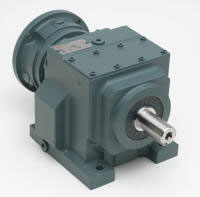 The Dodge gear reducer product line offers a full line of modular gear drives engineered for flexibility, greater torque density in a compact housing configuration, and increased horsepower capability from 0.25 to 73.76 hp (0.18 to 55 kW). The Quantis family of products offers the customer three types of gear reducers: In-Line Helical (ILH), Right-Angle Helical Bevel (RHB) and Motorized Shaft Mount (MSM). All three types of reducers are dimensionally interchangeable with major global competitors.
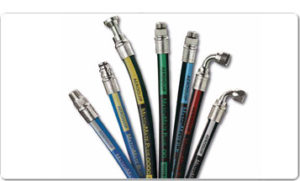 Hydraulic hose provides a basic means for transporting fluid from one component to another, and at the same time it supplies an inherent versatility to designers.
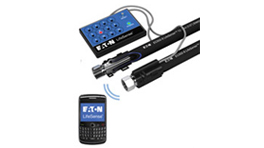 Introducing Eaton’s LifeSense™ a patented hydraulic hose condition monitoring technology. LifeSense™ monitors the health of hydraulic hose assemblies. As the hose assembly approaches the end of its useful life, LifeSense™ detects events occurring within the hose that have been shown to lead to failure and notifies the designated individual that the hose needs to be replaced. This notification is provided with enough time to replace the hose during planned maintenance prior to failure thus saving downtime, clean-up costs, environmental damage and potential injury.
 Mine Expo 2012 is this week, so for those of you that didn’t make it out to Vegas here are some products that can help increase your bottom line.
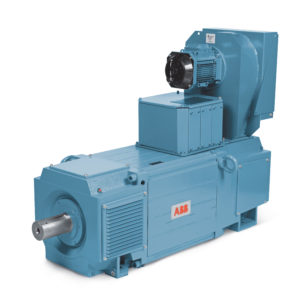
 The original NEMA Premium labeling scheme was designed to simplify the identification and application of NEMA Premium efficient motors by end users and original equipment manufacturers (OEMs). Since its inception, the NEMA Premium mark has gained wide acceptance with motor buyers, utilities, and other specifying organizations. The recognition of NEMA Premium has expanded from the United States to many countries around the globe. NEMA standards include efficiency levels for 60Hz as well as 50 Hz operation.